Streamlining User Authentication
UX
Background
Within our centralised login page, where customers’ employees were supposed log into their activity dashboard, we identified significant pain points in the user authentication flow. When using the existing interface, customer feedback highlighted confusion and frustration, particularly among new employees attempting to access their dashboard for the first time. I enhanced the overall user experience by simplifying the account setup and authentication journey, focusing primarily on first-time access.
Re-discovery
Gathering insights from support tickets, discussions with our customer success team, and leveraging data from Fullstory, I noted common themes related to the confusion during account set up. The major issue was when a customer’s employee had never logged into the dashboard before, meaning they did not have a password to use with their email. There was lack of clarity in how to set up a password, resulting in a failure to log in, major drop offs, and very low activity retention within in the feature.
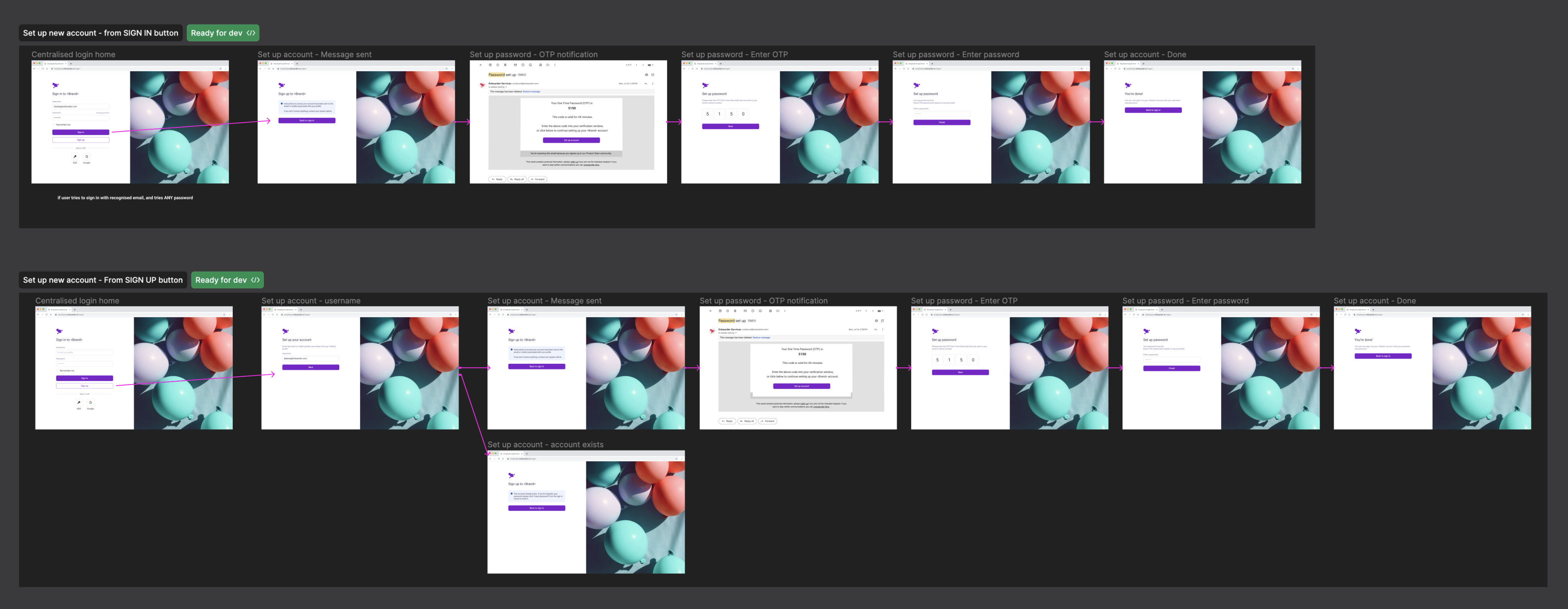
To address this, I conducted a comprehensive analysis of the existing user journey. Mapping this out allowed us to mark pain points, bottlenecks, and areas where frustration was most prevalent.
Revised user flow
I crafted a revised user flow that aimed to streamline the account setup process. This involved sending a verification email to the user when attempting to log in as a new account, without them having to request anything, as well as providing SSO and social log in options. The focus was to remove unnecessary friction and ensuring a seamless experience. I also revisited the error messaging copy, adding actionable instructions to guide users on how to rectify their issues promptly.
Collaboration and prototyping
I reviewed the new user flow with the product manager, backend, and frontend engineer, to ensure that the proposed changes were not only addressing customer needs, but also technically feasible. I then created a prototype to share with customer success, who, in turn, presented it to a sample group of end-users. This facilitated real-world feedback that was invaluable in refining the solution further.
Feedback from customers indicated a significant improvement in the account setup and authentication process. Users reported a more seamless and intuitive experience, addressing the initial concerns expressed.
Date: